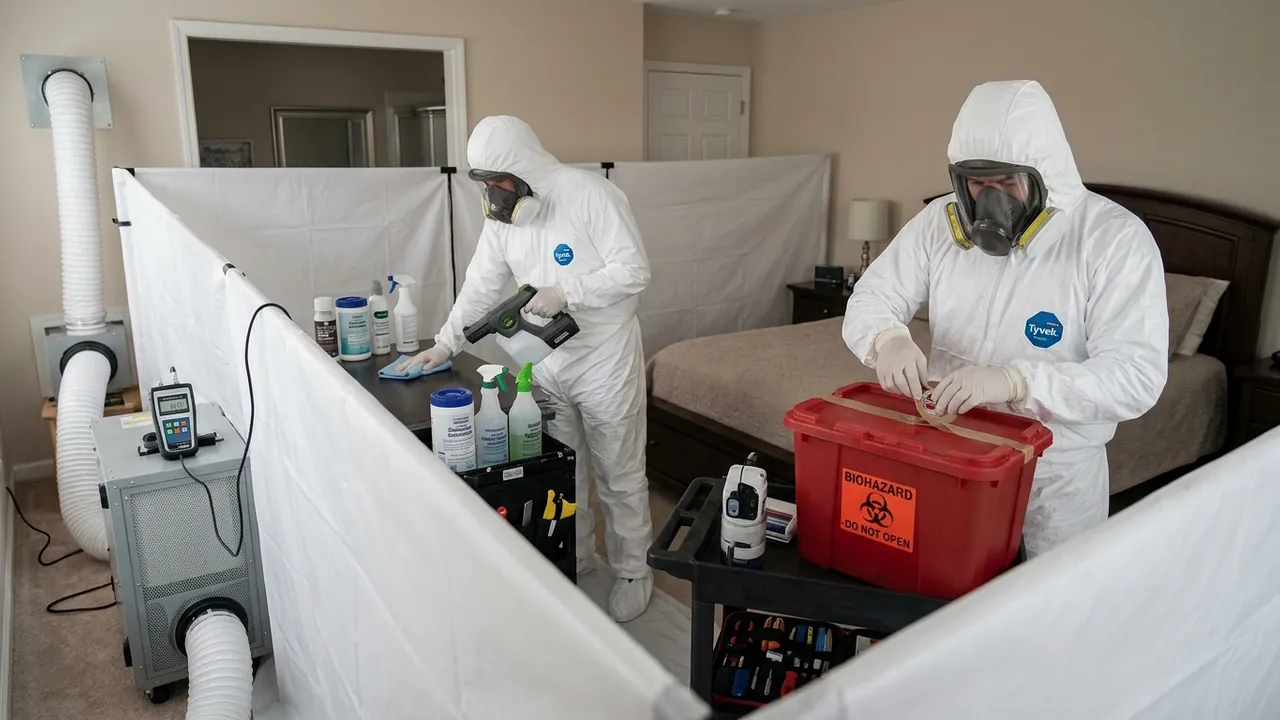
In the United States, including Chicago and Illinois, the property owner—not the police department, fire department, or emergency medical services—is legally responsible for hiring and arranging professional crime scene cleanup. Once law enforcement finishes gathering forensic evidence and officially releases the scene, responsibility for biological decontamination, structural restoration, and regulated medical waste disposal falls entirely on the property owner, landlord, or designated estate representative.
Why Don’t Police or First Responders Clean Crime Scenes?
A widespread misconception is that municipal emergency services restore properties after violent crimes or traumatic emergencies. In reality, police departments (such as the Chicago Police Department) are responsible strictly for law enforcement, criminal investigations, and evidence gathering.
Firefighters and paramedics focus on life safety, medical transport, and hazard mitigation. Once emergency personnel transport individuals and detectives complete forensic processing (including fingerprint dusting and photographic logs), law enforcement leaves yellow crime scene tape and releases the premises to the property owner.
What Are Landlord Legal Obligations in Rental Properties?
For rental properties, apartment buildings, and commercial facilities in Chicago, landlords and property managers bear legal obligations under the implied warranty of habitability and local municipal housing codes.
Property owners have a legal duty to provide safe, sanitary living conditions free from hazardous biohazards and bloodborne pathogens. Landlords must ensure common corridors, shared entryways, and rental units are decontaminated by trained remediation professionals before allowing other tenants, staff, or new residents to enter.
Commercial leases and residential lease agreements typically define protocol for unexpected tragedies, with property insurance policies covering structural decontamination under commercial general liability or building property coverages.
What Residues Do Forensic Investigations Leave Behind?
In addition to biological hazards like blood, tissue fragments, and bodily fluids, crime scene investigations leave behind substantial chemical and physical residues that require specialized remediation.
Forensic fingerprint powders consist of finely ground graphite, aluminum, or magnetic iron oxides that adhere stubbornly to walls, woodwork, and cabinetry. Luminol and chemical reagents used to detect latent blood leave sticky chemical films. Professional forensic restoration specialists deploy specialized solvent binders and HEPA vacuums to lift investigation residues without staining surfaces.
What Financial Assistance Exists for Crime Scene Decontamination in Illinois?
Property owners and surviving families facing crime scene cleanup expenses have multiple avenues for financial assistance in Illinois.
First, standard homeowners (HO-3) and business property insurance policies frequently cover forensic cleanup services, with the owner responsible only for the deductible. Second, the Illinois Crime Victims Compensation Act (740 ILCS 45/) provides financial compensation to innocent victims of violent crime and their families, covering eligible crime scene remediation expenses. Professional remediation providers help families prepare the required police reports and itemized invoices needed for compensation claims.
Need Immediate Crime Scene Cleanup in Chicago?
Our forensic cleanup team coordinates with law enforcement and insurance carriers across Chicago, restoring safety and privacy to your property with complete discretion.
Frequently Asked Questions
Can a landlord deduct crime scene cleanup expenses from a tenant’s security deposit?
Under Illinois tenant law, security deposits are designated for tenant-caused property damage beyond normal wear and tear. In situations involving violent crime or unexpected trauma, landlords generally utilize property insurance coverage rather than attempting to deduct significant forensic remediation expenses from security deposits.
When is it safe to begin crime scene cleanup?
Remediation cannot begin until the investigating law enforcement agency (such as the Chicago Police Department) and the medical examiner’s office have officially concluded their investigation and formally released the scene back to the property owner.
What happens if a property owner ignores crime scene biohazards?
Leaving biohazardous materials untreated creates severe biological health risks, invites pest infestations, and violates municipal housing codes. Property owners may face building citations, health department sanctions, and significant civil liability for endangering tenants or visitors.