Professional Sewage Cleanup & Blackwater Extraction in Chicago, IL
Rapid, compliant Category 3 blackwater extraction, structural antimicrobial washing, and psychrometric drying for Chicago residences, commercial properties, and garden apartments. Technicians adhere to IICRC S500 restoration guidelines and OSHA workplace safety standards to eliminate waterborne pathogens, harmful bacteria, and sewer gas hazards.
Discreet unmarked response vehicles • Serving all 35 Chicago neighborhoods & Cook County
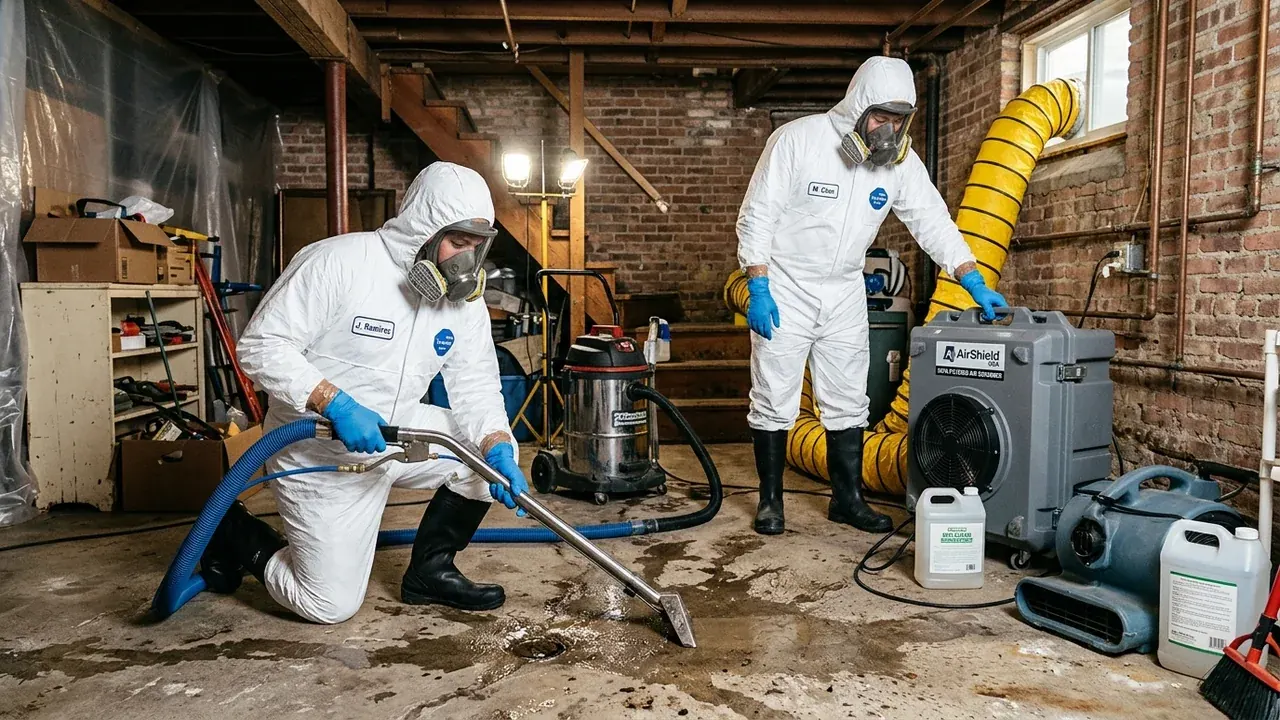
Remediation Scope Parameters
IICRC S500 Standards
Professional Water Remediation Guidelines
EPA-Registered Germicides
Hospital-Grade Disinfection Products
100% Discreet Response
Unmarked Vehicles for Privacy
Rapid Chicago Dispatch
Serving All 35 Neighborhoods
When Is Professional Sewage & Blackwater Cleanup Required in Chicago?
Raw sewage contains dangerous biological contaminants and waterborne pathogens that require specialized containment and extraction.
Professional sewage cleanup in Chicago is required whenever raw wastewater, municipal sewer backflow, or toilet overflow enters a residential or commercial building. Classified as Category 3 blackwater under IICRC S500 standards, sewage contains dangerous waterborne pathogens—including Escherichia coli (E. coli), Salmonella, Hepatitis A, Norovirus, and parasitic Giardia—as well as toxic sewer gases. Standard custodial mopping or consumer shop vacuums cannot decontaminate porous concrete, wall framing, or drywall. Certified remediation teams extract bulk wastewater with commercial equipment, surgically remove contaminated porous substrates, apply EPA-registered hospital germicides, and perform industrial psychrometric drying to prevent hazardous mold amplification.
Combined Sewer Backups During Storms
Heavy Midwest rainstorms frequently overwhelm Chicago municipal combined sewers, forcing mixed stormwater and raw wastewater upward through basement floor drains and utility sinks.
Vintage Multi-Unit Stack Collapses
Aging cast iron soil stacks and lateral drain lines in historic Chicago brick two-flats and courtyard apartment buildings experiencing severe blockages or structural fracturing.
Basement Sump & Ejector Pump Failures
Mechanical motor breakdowns, float switch malfunctions, or power outages causing sewage ejector pits to overflow into finished basements, rec rooms, and lower living quarters.
Commercial Kitchen Grease Line Surcharges
Restaurant, hospitality, and food processing waste line clogs causing sanitary backup across commercial kitchen floors, storage zones, and patron facilities requiring rapid sanitization.
Upper-Level Toilet & Drain Overflow
Multi-story residential condominiums or office restrooms where pressurized sewage overflows penetrate floorboards, saturating ceiling drywall and wall cavities below.
Foundation Seepage & Hydrostatic Surcharges
Groundwater contaminated by municipal sewer overflow seeping through limestone foundation rubble walls and expansion joints in historic Chicago buildings.
Why Sewage Requires Specialized Category 3 Biohazard Protocols
Water damage severity is defined by contamination levels, not just moisture volume. Understanding the difference protects property occupants from severe health hazards.
| Category Level | Water Origin & Description | Biological & Chemical Hazard | Remediation Requirements |
|---|---|---|---|
| Category 1 Clean Water | Broken supply pipes, overflowing sinks from clean supply, melting ice or falling rainwater before surface contact. | Negligible initial biological risk; can degrade to Category 2 within 24–48 hours if left unmanaged. | Direct water extraction, commercial dehumidification, structural drying without invasive demolition if addressed immediately. |
| Category 2 Greywater | Washing machine discharge, dishwasher overflows, aquarium leaks, water with mild chemical or nutrient contamination. | Contains unsafe levels of microorganisms, detergents, or dissolved organic matter. Can cause discomfort or illness. | Extraction, targeted removal of saturated carpets and porous padding, antimicrobial wash, and intensive psychrometric drying. |
| Category 3 Blackwater (Sewage) | Raw sewage backups, municipal main surcharges, toilet traps containing feces, river/lake flooding, and stagnant water. | High biohazard risk: pathogenic bacteria (E. coli, Salmonella), viruses (Hepatitis A, Norovirus), parasites, endotoxins, and hazardous sewer gas. | Full biohazard protocol: negative-pressure isolation, complete surgical removal of porous substrates, hospital-grade germicides, and manifested waste disposal. |
Critical Health Notice: Category 3 blackwater should never be treated as standard water damage. Attempting to vacuum sewage with household shop-vacs aerosolizes dangerous bacterial endotoxins into the indoor air, spreading biological contamination to upper living areas through HVAC ventilation.
Property Insurance Coverage for Sewage Backups in Illinois
Most standard Illinois property insurance policies require a specific “Water Backup of Sewer or Drain” endorsement to cover sewage damage. When present, this coverage helps pay for professional extraction, disinfection, and repairs.
Rapid Claim Assistance
Facing a sewage spill in your basement or commercial property is overwhelming. Our response coordinators guide you through emergency mitigation steps and assist with your insurance claim.
Speak With a Coordinator: (312) 555-0387Our 6-Stage Chicago Sewage Extraction & Decontamination Protocol
Every sewage incident is resolved using strict engineering controls, multi-barrier sanitization, and controlled psychrometric drying to protect public health.
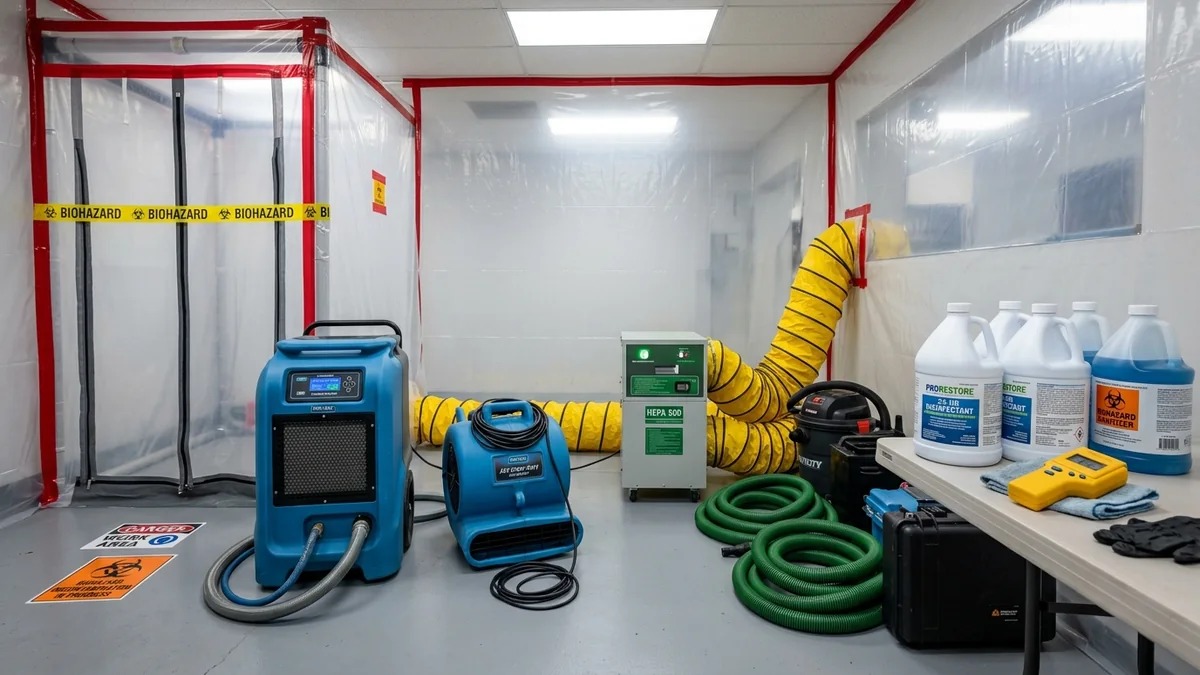
Negative-Pressure Isolation & Aerosol Containment
To prevent sewer gases, aerosolized bacteria, and airborne pathogens from migrating from basements into upper residential living spaces or commercial retail floors, containment zones maintain negative airflow with industrial HEPA scrubbers.
Hazard Assessment & Moisture Mapping
Technicians establish safety perimeters, inspect sewer backflow origins, and use electronic moisture meters and thermal imaging to map water migration behind baseboards and flooring.
Negative-Pressure Isolation & Air Scrubbing
Sealing basement stairwells, HVAC vents, and interior doorways with heavy poly containment barriers while operating HEPA air scrubbers to capture airborne bioaerosols and sewer odors.
Bulk Wastewater & Blackwater Extraction
Utilizing high-capacity commercial submersible pumps and truck-mounted vacuum units to rapidly extract standing sewage, eliminating standing water and reducing hydrostatic pressure.
Surgical Removal of Saturated Porous Materials
Saturated porous substrates—including wet drywall flood cuts, carpeting, padding, baseboards, and contaminated fiberglass insulation—are carefully excised and packaged for proper disposal.
EPA Hospital-Grade Antimicrobial Sanitization
Multi-stage application of broad-spectrum EPA-registered hospital germicides across concrete slabs, foundation footings, and structural framing to neutralize bacteria and viruses.
Psychrometric Drying & Service Report
Industrial Low-Grain Refrigerant (LGR) dehumidifiers and high-velocity air movers dry structural framing to equilibrium moisture levels. Property owners receive a Decontamination Service Report.
Chicago Sewer Infrastructure & Building Structural Vulnerabilities
Chicago's historic building stock and unique municipal sewer mechanics require specialized local remediation expertise.
Combined Sewer System & MWRD Surcharges
Chicago's municipal system combines stormwater runoff and sanitary sewage into single pipes. During sudden Great Lakes storm surges, municipal mains can surcharge before the Metropolitan Water Reclamation District (MWRD) Tunnel and Reservoir Plan (TARP) can absorb the volume, forcing sewage backward through residential basement drains.
Classic Chicago Brick Bungalows
The historic brick bungalows lining Portage Park, Belmont Cragin, and Ashburn often feature finished basements below street grade. When city sewers back up, floor drains and laundry standpipes overflow, saturating perimeter wall furring strips, carpet subflooring, and concrete expansion joints.
Vintage Two-Flats & Brownstones
Found extensively in Lincoln Park, Logan Square, and Bronzeville, classic two-flats and brownstones often rely on century-old cast iron lateral drains and shared sewer taps. Settling foundations and tree root intrusion make these properties particularly vulnerable to lateral blockages and garden unit backups.
Illinois Environmental & Occupational Safety Compliance
Sewage extraction and biological wastewater remediation in Cook County are governed by rigorous safety guidelines and environmental standards.
IICRC S500 Restoration Standard
Adherence to the IICRC S500 Standard for Professional Water Damage Restoration, governing psychrometric moisture calculations, containment setups, and Category 3 blackwater material removal guidelines.
OSHA Workplace Safety Standards
Strict adherence to OSHA 29 CFR 1910.1030 (bloodborne pathogens) and 1910.120 (hazardous waste operations) workplace safety standards, mandating personal protective equipment (PPE) and worker health safeguards.
Illinois EPA Waste Handling Rules
Contaminated porous construction debris and biological waste materials are safely packaged, documented, and transported for disposal adhering to Illinois EPA waste management standards.
Related Biohazard Remediation Services in Chicago
Our specialized remediation units provide comprehensive biological cleaning and forensic restoration across Chicago and Cook County.
Biohazard Cleanup
Comprehensive biological decontamination, negative-air containment, and pathogen neutralization across all Chicago neighborhoods.
Blood Cleanup
Specialized bloodborne pathogen extraction, antimicrobial sanitization, and structural sealing following severe injuries or accidents.
Crime Scene Cleanup
Forensic cleaning, blood removal, and chemical neutralizations following official law enforcement releases across Chicago.
Trauma Scene Cleanup
Discreet, compassionate remediation for industrial accidents, severe injuries, and traumatic incidents in residences and workplaces.
Unattended Death Cleanup
Biological fluid decontamination, structural timber restoration, and molecular odor neutralization after delayed death discoveries.
Biohazard Waste Disposal
State-licensed packaging, DOT-compliant transportation, and manifest tracking documentation for regulated medical waste disposal.
Sewage Remediation Protocols by Property Classification
From residential garden basements and condominiums to commercial food service facilities and office complexes, we adapt containment workflows to building structures.
Residential Basements & Multi-Flats
Basement sewer backups threaten personal belongings, living areas, and indoor air quality. We manage containment in single-family bungalows, brownstones, and condominium units across Chicago.
Commercial Facilities & Workplaces
Commercial sewer backups present severe health code violations and operational closure. We implement rapid containment and off-hours remediation to restore sanitary operations quickly.
Serving All 35 Chicago Neighborhoods & Cook County
Our mobile blackwater extraction and decontamination units dispatch across all sectors of Chicago and adjacent Cook County communities.
Full Coverage Directory Across All 35 Neighborhoods
Explore comprehensive localized service specifications, ZIP code mappings, and dispatch information.
Frequently Asked Questions About Sewage Cleanup in Chicago
Clear, factual answers regarding Category 3 blackwater hazards, insurance coverage, and professional decontamination protocols.