Biohazard Cleanup
Total containment, biological fluid extraction, and structural sanitization for vintage flats, courtyard apartments, and condos across Lakeview.
Chicago Biohazard HubWhen biological contamination, traumatic loss, or critical environmental hazards impact a classic brick 3-flat in Lakeview East, a vintage courtyard apartment in Wrigleyville, or a single-family home along the Southport Corridor in Chicago’s Lakeview community (covering ZIP codes 60613 and 60657), fast, compassionate, and technically sound intervention is vital. Operating throughout the 60613 and 60657 areas, trained remediation technicians deliver professional decontamination services designed to protect resident privacy, structural hardwood assemblies, and building occupant safety.
Discreet unmarked response vehicles • Servicing Lakeview East, Wrigleyville, West Lakeview, Southport Corridor, Belmont Ave & Clark St
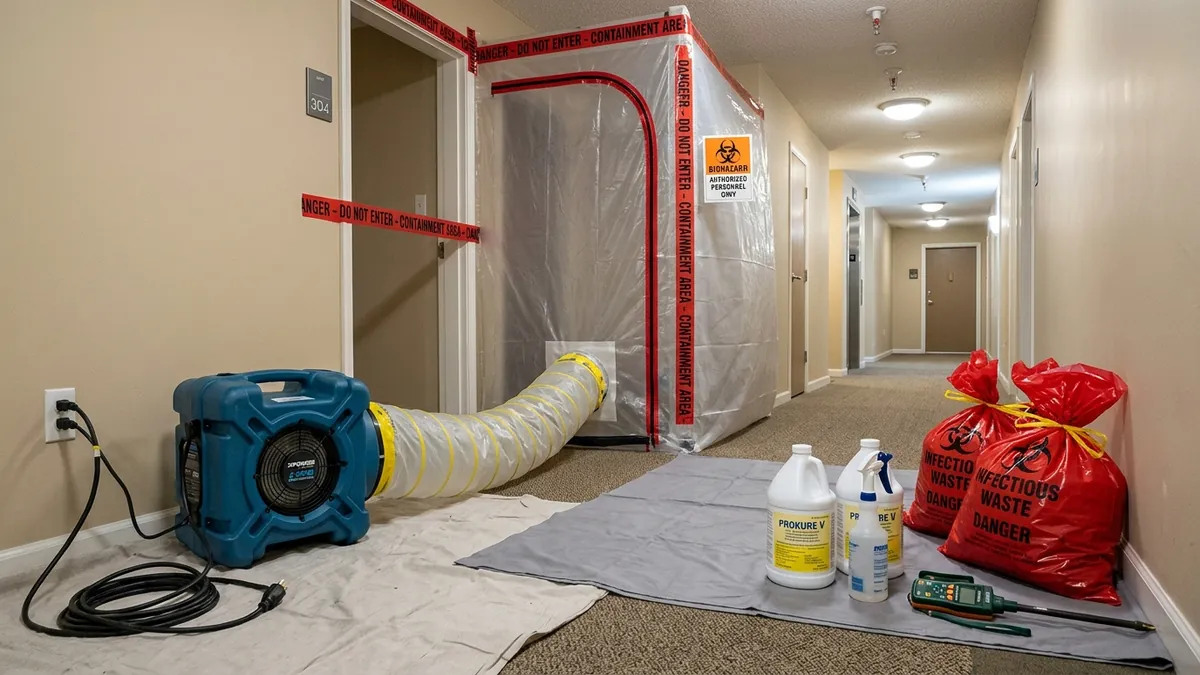
Direct Answer: Biohazard cleanup in Lakeview (Chicago ZIP codes 60613 and 60657) involves the rapid containment, clinical sanitization, and compliant disposal coordination of biological contaminants, bloodborne pathogens, and decomposition residues across vintage 2- and 3-flats, multi-unit courtyard apartments, and lakefront condominiums. Utilizing EPA-registered disinfectants applied according to label directions, HEPA-filtered negative air scrubbers, and discreet rear alley staging, trained remediation technicians restore affected properties to clean and sanitary conditions.
Chicago’s Lakeview community—encompassing Lakeview East, Wrigleyville, West Lakeview, and the Southport Corridor across ZIP codes 60613 and 60657—is one of the North Side’s most densely inhabited residential and cultural centers. The neighborhood’s architecture is celebrated for its historic brick 2-flats and 3-flats, multi-story courtyard apartment complexes, modern mixed-use developments along Clark and Belmont, and lakefront high-rises along Sheridan Road and Lake Shore Drive. When a traumatic incident, unattended death, severe hoarding condition, or Category 3 blackwater sewage backup occurs in these tightly clustered properties, routine domestic janitorial cleaning is unsafe and legally insufficient.
Biological fluids, bloodborne pathogens (including Hepatitis B, Hepatitis C, and HIV), and organic decomposition compounds create serious health risks that readily migrate through vintage building structures. In historic Lakeview walk-ups, fluids soak through 100-year-old hardwood flooring into subfloor planking, floor joists, and ceiling cavities of lower apartments. In courtyard buildings, shared radiator pipe chases and vertical ventilation shafts can spread airborne odors across multiple units. Our field teams operate with utmost discretion, staging in rear service alleys with unmarked vehicles upon request, coordinating with landlords, condominium boards, and families to restore safety while protecting community privacy.
Each neighborhood page acts as a comprehensive local hub. We provide complete coverage across the site’s 13 service hubs: 10 remediation/service hubs + 3 audience/urgency modifier hubs, specially adapted to the unique architectural demands of Lakeview.
Total containment, biological fluid extraction, and structural sanitization for vintage flats, courtyard apartments, and condos across Lakeview.
Chicago Biohazard HubForensic residue cleaning, chemical neutralizers, and biological hazard decontamination following Chicago Police Department 19th District scene release.
Crime Scene ServicesCompassionate, fast remediation following sudden traumatic accidents, severe injuries, or critical medical emergencies in residential and commercial settings.
Trauma Scene ServicesAdvanced decomposition odor counteraction, subfloor biological fluid extraction, and complete sanitization for walk-up flats and courtyard buildings across 60613 and 60657.
Unattended Death ProtocolMitigation of bloodborne pathogen risks from porous hardwood, communal stairwells, and shared porches using EPA-registered disinfectants applied according to label directions.
Blood Cleanup StandardsRespectful, non-judgmental clutter sorting, gross filth removal, and biohazard sanitization coordinated discreetly within compact Lakeview apartments.
Hoarding SolutionsCategory 3 blackwater extraction, antimicrobial treatment, and rapid structural drying for garden flats, basement storage lockers, and shared multi-unit sewer lines.
Sewage RemediationElectrostatic broad-spectrum application of EPA-registered disinfectants per label directions for multi-tenant common corridors, entry foyers, and commercial facilities.
Disinfection ProtocolsCompliant packaging and tracking manifests, with transportation and treatment coordinated through appropriately permitted PIMW providers under 35 Ill. Adm. Code Part 1420.
PIMW Disposal DetailsMobile automotive biohazard decontamination for private vehicles, rideshare units, and delivery vehicles parked in Lakeview garages and residential alley pads.
Vehicle DecontaminationDedicated walk-up and multi-family flat decontamination protecting Lakeview families, tenants, and estate trustees with compassionate, private service.
Residential Biohazard HubRemediation practices informed by applicable OSHA requirements tailored for Wrigleyville venues, Clark and Belmont retail shops, restaurants, and property management firms.
Commercial Biohazard HubRapid response coordination and immediate containment stabilization for acute biohazard crises throughout the 60613 and 60657 areas.
Emergency Dispatch ProtocolsPerforming biohazard remediation in Chicago’s Lakeview neighborhood requires specialized expertise in vintage residential construction. The building inventory across East Lakeview, Wrigleyville, West Lakeview, and the Southport Corridor consists predominantly of century-old brick 2-flats, 3-flats, and large multi-unit courtyard walk-ups, alongside contemporary condominiums.
In classic multi-flat buildings, tongue-and-groove hardwood floors lack subfloor water barriers. When an unattended death, traumatic event, or severe biological incident occurs, fluids seep between floorboards into rough pine subflooring, structural joist cavities, and the lath-and-plaster ceilings of lower residences. Furthermore, vintage courtyard buildings share vertical steam radiator chases, common plumbing stacks, and communal interior staircases, which create conduits for airborne decomposition odors if critical containment is not established immediately.
Every situation is met with genuine empathy, total discretion, and rigorous technical standards. Here are the primary scenarios our teams handle across ZIP codes 60613 and 60657.
When an unexpected passing, medical emergency, or unattended death occurs in a private flat or condo, grieving families face profound distress. Our compassionate teams handle the remediation with dignity, deeply sanitizing porous hardwood, neutralizing persistent odors, and recovering cherished personal keepsakes with care.
Property managers overseeing rental buildings and courtyard complexes require rapid, confidential turnaround when biological incidents impact tenant units or common areas. We isolate affected flats, prevent odor spread through shared radiator risers, and deliver detailed documentation for property records.
Sports bars, dining establishments, and retail stores along Clark, Belmont, and Halsted occasionally encounter patron medical emergencies or severe sewer drain backups. Technicians stage privately via rear service alleys, applying remediation practices informed by applicable OSHA requirements to restore sanitary conditions safely.
We adhere to a structured 6-step remediation methodology designed to reduce biological hazards, address persistent odors, and restore affected areas to a clean and sanitary condition.
Technicians arrive in unmarked vehicles, stage via rear service alleys or private driveways, evaluate structural fluid penetration into hardwood and subfloor framing, and formulate a targeted scope of work.
We establish critical poly-containment barriers and deploy commercial negative air machines with high-efficiency HEPA air filtration, designed to minimize cross-contamination into shared hallways or common radiator shafts.
Non-salvageable porous items (saturated subflooring, underlayment, damaged drywall) are safely removed, double-bagged, and secured inside properly labeled and secured containers appropriate for the applicable waste stream.
All structural subfloors, joists, and salvageable surfaces undergo multi-stage cleaning utilizing EPA-registered disinfectants applied according to label directions and specialized enzymatic washes to address bloodborne pathogen risks.
Industrial hydroxyl generators break down volatile airborne decomposition and biological odor compounds at the chemical level, avoiding superficial masking fragrances in dense multi-family environments.
Regulated medical waste handling and disposal is coordinated with appropriately permitted PIMW providers complying with 35 Ill. Adm. Code Part 1420. We deliver detailed remediation documentation for property and insurance records.
We combine deep technical expertise with compassionate, discreet support to help you through the most complex environmental crises.
Unmarked vehicles upon request, alley staging, and privacy-conscious coordination protect your personal privacy and community reputation.
Adherence to applicable OSHA 29 CFR 1910.1030 Bloodborne Pathogens Standard requirements, with regulated waste handling coordinated with permitted providers.
We document incident scopes, capture itemized photos, and coordinate directly with property or master insurance carriers to streamline claims processing.
Dedicated local coordinators provide guidance, answer your urgent questions, and arrange prompt Lakeview dispatch.
Real answers to common questions about biohazard cleanup, walk-up logistics, and regulations across Lakeview (60613, 60657).
Lakeview’s extensive inventory of classic 2-flats, 3-flats, and vintage frame walk-ups feature century-old tongue-and-groove oak or maple flooring laid over tar paper and diagonal pine subflooring. When an unattended death or traumatic injury occurs, biological fluids seep into the microscopic seams between boards, saturating the porous subfloor underlayment and migrating into structural floor joists and plaster ceilings of lower apartments. Technicians carefully extract non-salvageable saturated flooring, apply penetrating enzymatic washes and EPA-registered disinfectants according to label directions, and apply specialized antimicrobial barrier encapsulants to seal structural timbers without residual odors.
Our experienced coordinators are on standby to guide you through this difficult process with compassion, professionalism, and discreet service practices. Serving ZIP codes 60613 and 60657.
Privacy-conscious service coordination • Unmarked response vehicles available upon request