Emergency Biohazard Cleanup in Chicago, IL
Immediate, compassionate, and certified 24/7 mobile dispatch for acute biological contaminations, severe trauma incidents, active blood spills, unattended deaths, and hazardous blackwater backups across all 35 Chicago neighborhoods and Cook County. Operating adhering to OSHA 29 CFR 1910.1030 bloodborne pathogen standards with complete negative-pressure containment and discrete unmarked deployment.
Discrete unmarked response units • Certified technical staging • Serving all 35 Chicago neighborhoods & Cook County
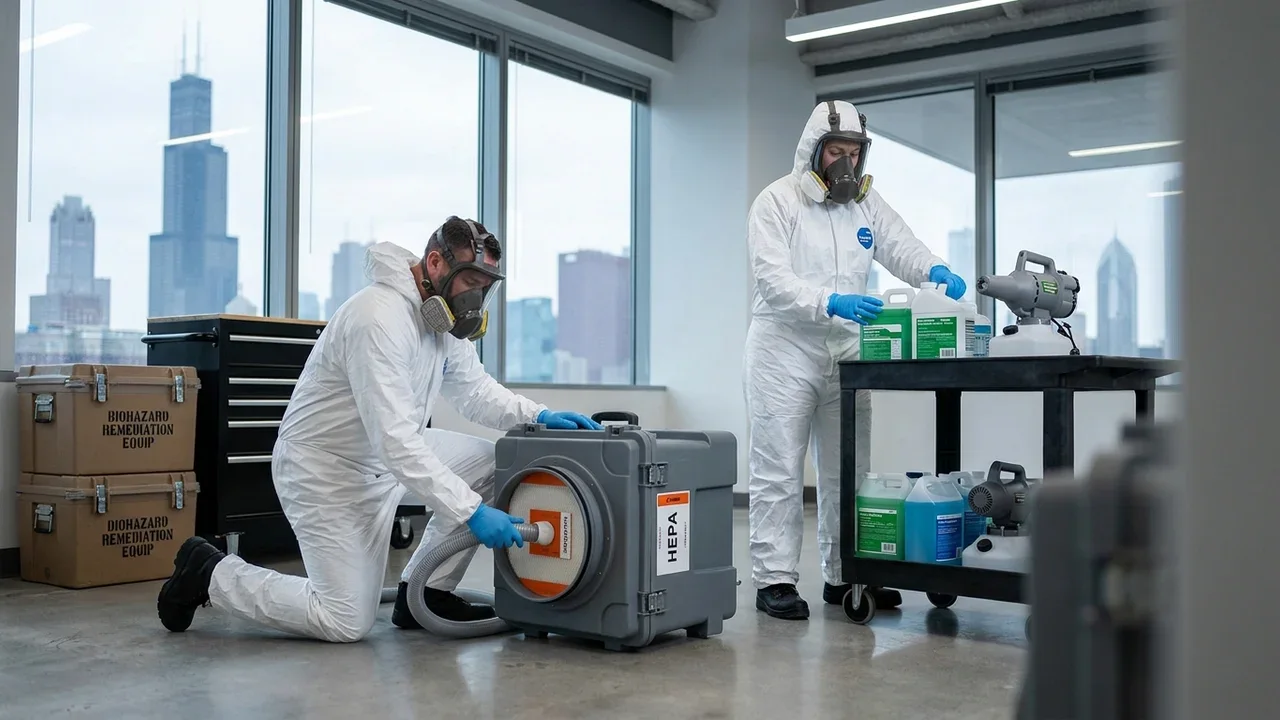
Emergency Incident Parameters
OSHA 29 CFR 1910.1030
Bloodborne Pathogen Safety Standards
IEPA Title 35 Part 1420
Potentially Infectious Medical Waste
100% Discrete Units
Unmarked Vehicles for Total Privacy
24/7 Mobile Dispatch
All 35 Chicago Neighborhoods
What To Do During a Biohazard Emergency in Chicago
Biological hazards present acute health risks through infectious bloodborne pathogens, aerosolized contaminants, and rapid porous penetration. Immediate containment is vital.
During a biohazard emergency in Chicago, occupants must immediately evacuate the affected room, close and lock access doors, deactivate central HVAC heating and cooling to stop airborne pathogen circulation, and avoid any contact with bodily fluids or contaminated surfaces. Do not attempt DIY cleaning with household bleach, standard mops, or shop vacuums, which aerosolize bloodborne pathogens (HIV, Hepatitis B, Hepatitis C) and drive bio-matter deeper into subfloors. Call a certified 24/7 biohazard emergency team to establish negative-pressure physical containment, extract biological matter under OSHA 29 CFR 1910.1030 protocols, disinfect structural materials using EPA-registered hospital germicides, and transport regulated medical waste under Illinois EPA Title 35 Part 1420 manifest tracking.
Active Traumatic Blood Spills
Severe workplace injuries, domestic accidents, or lacerations in residential living rooms, commercial lobbies, or production facilities requiring urgent bloodborne pathogen extraction and deep surface sanitization.
Unattended Death Discoveries
Acute biological decomposition discoveries in Chicago apartments, condos, or single-family homes requiring immediate physical containment, bio-fluid extraction, and molecular odor neutralization.
Post-Police Scene Releases
Rapid deployment once the Chicago Police Department (CPD) or Cook County Sheriff clears an investigation, removing fingerprint dust, chemical residues, and biological matter to allow property recovery.
Acute Category 3 Blackwater Inundation
Raw municipal sewage backups, storm drain surges, or toilet line failures contaminating residential basements, restaurants, or commercial retail spaces with dangerous enteric pathogens.
Multi-Unit Inter-Floor Fluid Seepage
High-rise condo or multi-family rental incidents where bio-fluids or contaminated water penetrate ceiling drywall, subfloors, and pipe chases into lower tenant suites, requiring rapid multi-level containment.
Industrial & Machinery Accidents
Catastrophic industrial, warehouse, or transit facility trauma events requiring rapid mobile decontamination, equipment sanitization, and compliance documentation to minimize downtime safely.
Immediate Emergency Action Guide: What To Do vs. What NOT To Do
Crucial actions to take in the first 30 minutes following a biohazard incident to protect occupants and preserve property while awaiting our mobile dispatch unit.
| Category | Action Protocol | Operational Rationale | Safety & Legal Impact |
|---|---|---|---|
| DO: Evacuate & Isolate Immediate Action | Vacate all individuals and pets from the contaminated area. Close interior doors, lock access points, and restrict all entry. | Eliminates cross-contamination tracking across unaffected carpet, hardwood, and shared corridors. | Prevents exposure to airborne bioaerosols and microscopic pathogen transfer. |
| DO: Shut Down HVAC Air System Control | Switch off local heating, central air conditioning, and ventilation fans serving the affected zone. | Forced-air circulation pulls volatile organic compounds (VOCs) and bioaerosols into building-wide ductwork. | Safeguards adjacent rooms, upper stories, and neighboring apartment or condo units. |
| DO NOT: Touch Biohazards Direct Contact Hazard | Never touch, move, or manipulate blood, bodily fluids, saturated bedding, or contaminated porous furnishings. | Pathogens such as Hepatitis B can survive in dried fluids on surfaces for days, presenting acute transmission hazards. | Protects occupants from bloodborne infections and severe biological contamination. |
| DO NOT: Use Household Tools DIY Cleanup Hazard | Do not use household mops, wet/dry shop vacuums, standard rags, or grocery-store bleach solutions. | Vacuums atomize biological fluids into fine aerosols; mops smear fluids across grout lines and under baseboards. | Prevents irreversible structural saturation and hazardous pathogen dispersion. |
| DO NOT: Task Untrained Staff Workplace Liability | Never direct standard janitorial, custodial, or maintenance employees to clean up blood or biohazardous fluids. | Violates OSHA 29 CFR 1910.1030 without certified bloodborne pathogen training, specialized PPE, and an exposure plan. | Shields commercial building owners and employers from severe OSHA fines and worker compensation liability. |
Urgent Public Health Warning: Biohazardous fluids contain active bloodborne pathogens, viruses, and bacteria capable of causing debilitating illness. Never dispose of biohazard-soaked materials in regular municipal trash bins or dumpsters; Illinois EPA statutes mandate certified packaging and destruction at licensed medical waste facilities.
Property & Commercial Insurance Coordination Across Cook County
In most unexpected biological contamination scenarios, standard homeowners (HO-3/HO-6) or commercial general liability insurance covers certified emergency remediation costs.
24/7 Emergency Dispatch
Facing an urgent biohazard emergency, active trauma scene, or severe biological spill? Contact our dispatch coordinator immediately for rapid mobilization.
Call Emergency Line: (312) 555-0387Our 6-Stage Chicago Emergency Biohazard Remediation Protocol
Every emergency deployment follows strict engineering containment, hospital-grade disinfection, and documented regulatory disposal procedures.
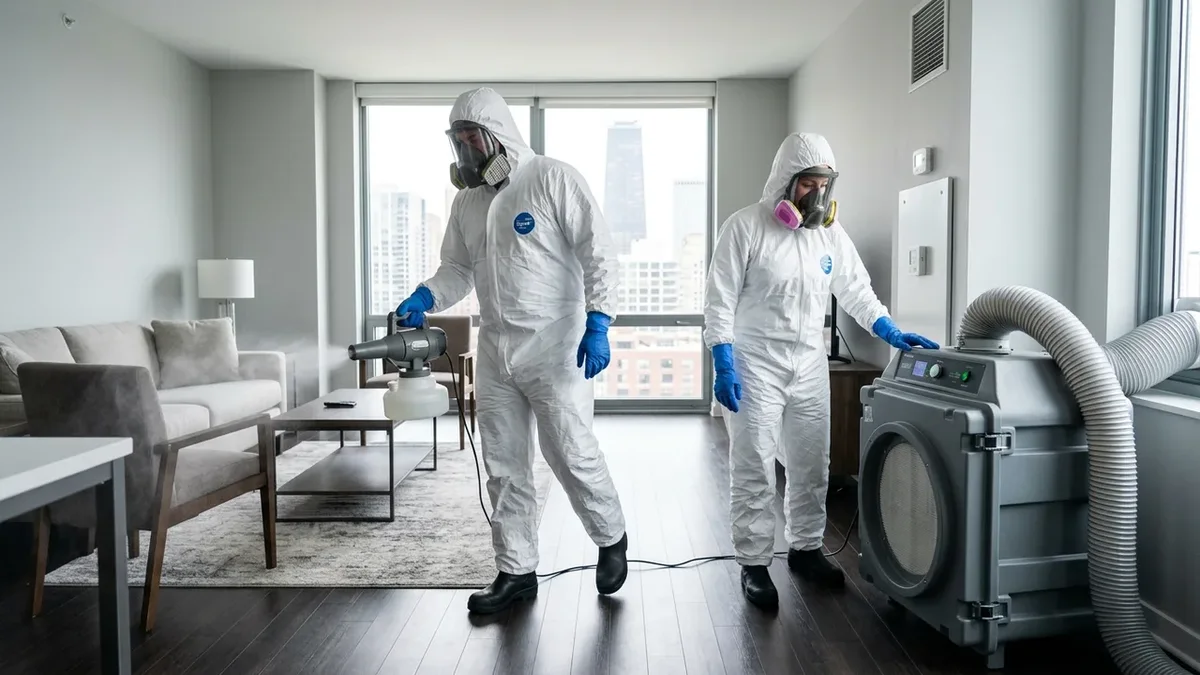
Negative-Pressure Sector Isolation & HEPA Scrubbing
To safeguard occupants, neighbors, and adjacent property suites from bioaerosols and volatile odors, technicians seal affected areas under continuous negative-pressure HEPA air filtration before commencing bulk remediation.
24/7 Immediate Triage & Mobile Dispatch
Immediate telephone triage establishes incident severity, structural scope, and safety directives. Mobile units deploy rapidly equipped with commercial extraction tools and level-appropriate personal protective equipment.
Physical Containment & Negative Air Scrubbing
Technicians erect airtight polyethylene containment walls and deploy industrial HEPA air scrubbers under negative pressure, sealing return ducts to prevent bioaerosols or odors from migrating to adjacent units.
Controlled Biohazard Extraction & Porous Removal
Extracting biological matter from structural assemblies. Saturated non-salvageable porous materials—such as carpeting, padding, drywall, and subflooring—are safely cut, removed, and sealed into statutory red biohazard bags.
Multi-Step EPA Hospital-Grade Disinfection
Applying broad-spectrum EPA-registered hospital disinfectants across concrete, framing studs, and remaining non-porous surfaces. Technicians rigorously monitor required wet contact dwell times to achieve certified pathogen kill rates.
Molecular Odor Neutralization & Encapsulation
Deploying commercial hydroxyl generators to neutralize airborne volatile organic compounds (VOCs) at the molecular level. Structural framing is sealed with antimicrobial encapsulation coatings to prevent future moisture or odor release.
PIMW Manifest Sign-Off & Safety Certification
Regulated medical waste is packaged in DOT-approved puncture-resistant containers and transported to licensed Illinois treatment facilities. Property owners receive a comprehensive Decontamination Service Report certifying full clearance.
Emergency Response Across Diverse Chicago Building Types
Navigating Chicago's distinctive structural architecture requires specialized equipment staging, ventilation management, and municipal logistical expertise.
High-Rise Towers & Luxury Condos
Remediating incidents in The Loop, River North, and Streeterville requires seamless coordination with building management and security. We utilize dedicated freight elevators, manage loading dock staging, and maintain discrete containment that protects resident privacy.
Historic Multi-Flats & Brownstones
Chicago's classic two-flats and vintage greystones in Lincoln Park, Wicker Park, and Bronzeville feature shared joists, lath-and-plaster walls, and radiant heat risers that allow rapid fluid migration. We deploy localized containment to isolate cross-floor pathways.
Industrial, Warehouse & Transit Hubs
Manufacturing facilities and distribution centers near O'Hare, the Central Manufacturing District, and South Side corridors require rapid trauma and chemical spill extraction. We deploy high-capacity industrial equipment to safely minimize operational downtime.
Regulatory Compliance & Worker Safety Standards
Emergency biohazard decontamination in Illinois is governed by rigorous state environmental regulations and federal occupational safety mandates.
OSHA 29 CFR 1910.1030 Standard
Full adherence to the OSHA Bloodborne Pathogen Standard, mandating universal precautions, negative-pressure containment controls, certified PPE, and regulated disposal protocols to eliminate biological transmission risks.
Illinois EPA Title 35 Part 1420
Compliance with IEPA Potentially Infectious Medical Waste (PIMW) statutes. Extracted biohazards are packaged in statutory puncture-resistant containers and transported to licensed treatment facilities under tracked manifests.
OSHA General Duty Clause
Supporting commercial employers and property managers in fulfilling legal obligations under Section 5(a)(1) of the OSH Act, ensuring workplaces are certified free from recognized biological hazards before re-entry.
Related Biohazard Remediation Services in Chicago
Our specialized remediation units deliver comprehensive biological decontamination, forensic cleaning, and environmental restoration across Cook County.
Biohazard Cleanup
Comprehensive biological decontamination, negative-air containment, and pathogen neutralization across all Chicago neighborhoods.
Blood Cleanup
Specialized bloodborne pathogen extraction, antimicrobial sanitization, and structural sealing following severe injuries or traumatic incidents.
Crime Scene Cleanup
Forensic cleaning, blood removal, and chemical neutralizations following official law enforcement releases across Chicago.
Trauma Scene Cleanup
Discreet, compassionate remediation for industrial accidents, severe injuries, and traumatic incidents in residential and commercial settings.
Unattended Death Cleanup
Compassionate decomposition remediation, biological hazard removal, and hydroxyl molecular odor neutralization for Chicago families.
Sewage Cleanup
Emergency Category 3 blackwater extraction, antimicrobial sanitization, and structural drying for flooded basements and commercial drain lines.
Biohazard Waste Disposal
State-licensed packaging, DOT-compliant transportation, and manifest tracking documentation for regulated medical waste disposal.
Commercial Biohazard Cleanup
Compliant workplace biological decontamination, corporate facility remediation, OSHA compliance, and off-hours dispatch.
Residential Biohazard Cleanup
Compassionate in-home biological remediation for private single-family houses, vintage two-flats, apartments, and condominiums.
Specialized Emergency Remediation by Property Sector
Whether responding to a private family residence or a multi-floor commercial high-rise, our protocols are specifically engineered to address the unique operational requirements of each property type.
Residential Homeowners & Condos
In-home biological contamination, traumatic family emergencies, and unattended deaths require compassionate care, 100% discrete response, and direct coordination with homeowners insurance carriers.
Commercial Facilities & Enterprises
Workplace trauma incidents, machinery accidents, and corporate contamination require strict OSHA 29 CFR 1910.1030 adherence, after-hours staging, and documented re-occupancy clearance.
Serving All 35 Chicago Neighborhoods & Cook County
Our mobile emergency biohazard remediation units dispatch across all sectors of Chicago and adjacent Cook County communities 24 hours a day, 7 days a week.
Full Coverage Directory Across All 35 Neighborhoods
Explore comprehensive localized service specifications, ZIP code mappings, and emergency dispatch information.
Frequently Asked Questions About Emergency Biohazard Cleanup in Chicago
Clear, factual answers regarding 24/7 mobile dispatch, bloodborne pathogen safety standards, insurance documentation, and rapid property clearance in Cook County.