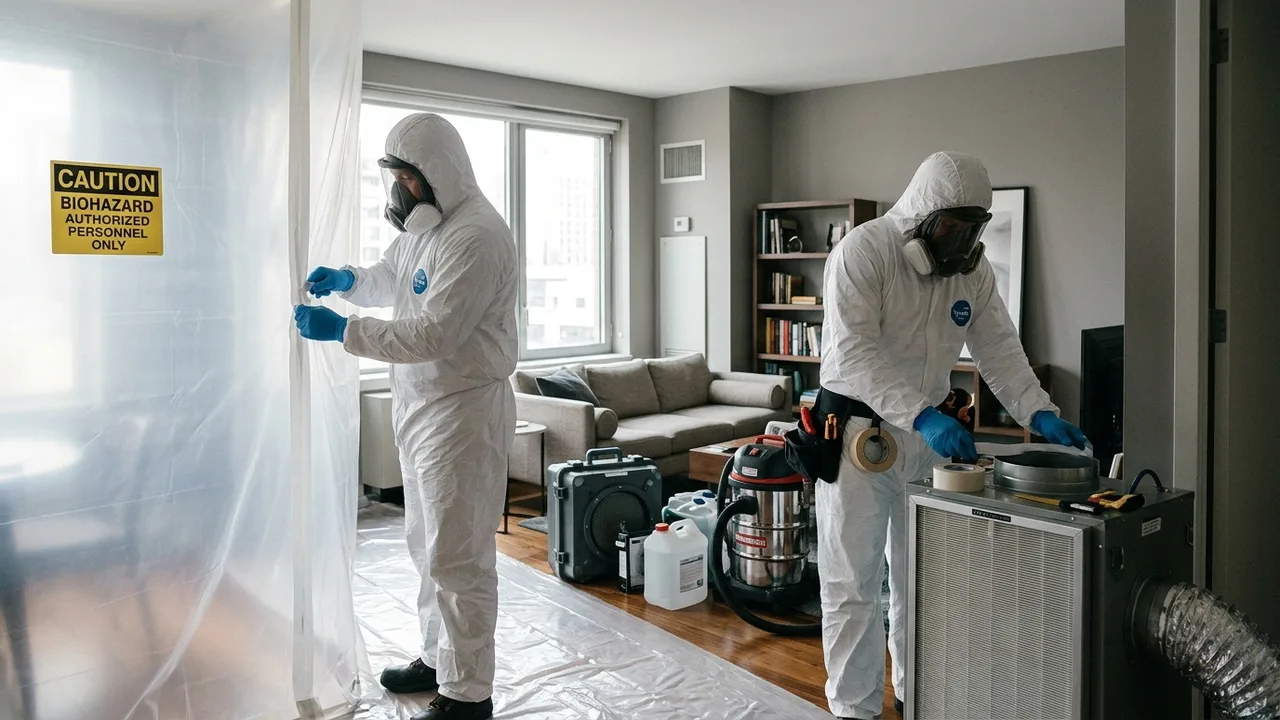
Unattended death cleanup is the specialized forensic decontamination process required when an individual passes away undiscovered for days or weeks. Professional remediation involves establishing negative pressure physical containment, extracting biological decomposition fluids that have penetrated subflooring or framing, removing contaminated building materials, applying hospital-grade virucides, and deploying industrial hydroxyl generators to permanently eliminate volatile decomposition gases at the molecular level.
Why Does Decomposition Present Serious Biological Hazards?
Following death, cellular autolysis and bacterial putrefaction begin within hours. Microorganisms naturally present within the gastrointestinal tract multiply rapidly, releasing enzymes that break down soft tissues into liquid decomposition effluents and volatile organic compounds (VOCs).
These biological fluids contain concentrated bacteria, proteins, and potential bloodborne pathogens that saturate porous flooring, baseboards, and structural timbers. Concurrently, the decomposition process generates volatile gases—including cadaverine, putrescine, indole, skatole, and sulfur compounds—that produce severe odors, irritate respiratory systems, and absorb deeply into drywall, ceilings, and HVAC ductwork.
What Are the Critical Steps in an Unattended Death Remediation Protocol?
Professional remediation commences only after the Cook County Medical Examiner and local law enforcement authorities have completed their investigation and officially released the premises.
Step 1: Physical Containment & Negative Pressure. Technicians seal the affected room with 6-mil polyethylene sheeting and zippered ante-rooms, activating HEPA air scrubbers to establish negative pressure. This prevents airborne odors and microscopic particulates from drifting into unaffected living spaces.
Step 2: Biological Extraction & Substrate Removal. Saturated carpeting, underlayment, and porous subfloors are surgically excised. Fluid migration frequently tracks along hardwood joints into floor joist cavities, requiring inspection beneath the floor level to treat all impacted framing.
Step 3: Biocidal Sanitization. All structural timber and concrete surfaces undergo rigorous cleaning with enzymatic cleaners followed by EPA-registered hospital-grade disinfectants.
Step 4: Molecular Odor Neutralization. Rather than using masking sprays or corrosive ozone, industrial mobile hydroxyl generators circulate natural atmospheric radicals throughout the home to break down odor molecules at the chemical bond level.
Step 5: Barrier Encapsulation & PIMW Disposal. Exposed structural framing is coated with antimicrobial sealants, while contaminated debris is sealed in Illinois PIMW packaging for regulated autoclave destruction.
Why Are Standard Cleaning Methods and Ozone Ineffective for Decomposition Odors?
Over-the-counter cleaning chemicals and conventional carpet cleaning machinery only treat superficial surface dirt. They cannot reach biological fluids that have soaked into tongue-and-groove subflooring, joists, or concrete foundation pores. Furthermore, attempting to scrub decomposition fluids without proper protective equipment aerosolizes dangerous pathogens.
While some contractors rely on ozone machines for odor removal, ozone is an aggressive oxidizer that can degrade rubber, wiring insulation, carpet fibers, and fine furniture finishes. Modern forensic restoration utilizes hydroxyl generation technology, which safely dismantles decomposition VOCs without damaging structural building components or personal belongings.
How Should Families Handle Personal Property and Keepsakes?
Facing the loss of a family member in an unattended passing is an emotionally overwhelming experience. Forensic technicians work with sensitivity, separating non-porous sentimental items (such as family photographs, jewelry, and metal keepsakes) from the contamination zone.
Salvageable personal effects are carefully decontaminated using specialized broad-spectrum disinfectant wipes and returned to the family, while heavily saturated, non-restorable materials are cataloged for insurance claim records before disposal.
Facing an Unattended Death in Chicago or Cook County?
Our experienced forensic restoration team provides compassionate, discreet decontamination 24 hours a day. We handle every step with the utmost dignity and care.
Frequently Asked Questions
How long does an unattended death cleanup typically take?
Remediation timelines depend on the duration of discovery, room temperature, and structural saturation. Small, contained scenes may take one to two days, while complex scenarios involving multiple floor assemblies and extensive hydroxyl odor treatment generally require three to five days.
Will decomposition odors ever return after professional cleanup?
When forensic remediation is conducted thoroughly—including surgical removal of saturated subflooring, biocidal sanitization of structural timber, antimicrobial encapsulation, and hydroxyl air treatment—decomposition odors are permanently eliminated at the molecular level and will not return.
Can the property owner stay in the home while cleanup is taking place?
For health, safety, and emotional comfort, occupants are strongly advised to remain outside the immediate containment area during biological extraction and chemical virucidal application. Once containment testing verifies complete clearance, the home is safe for occupancy.