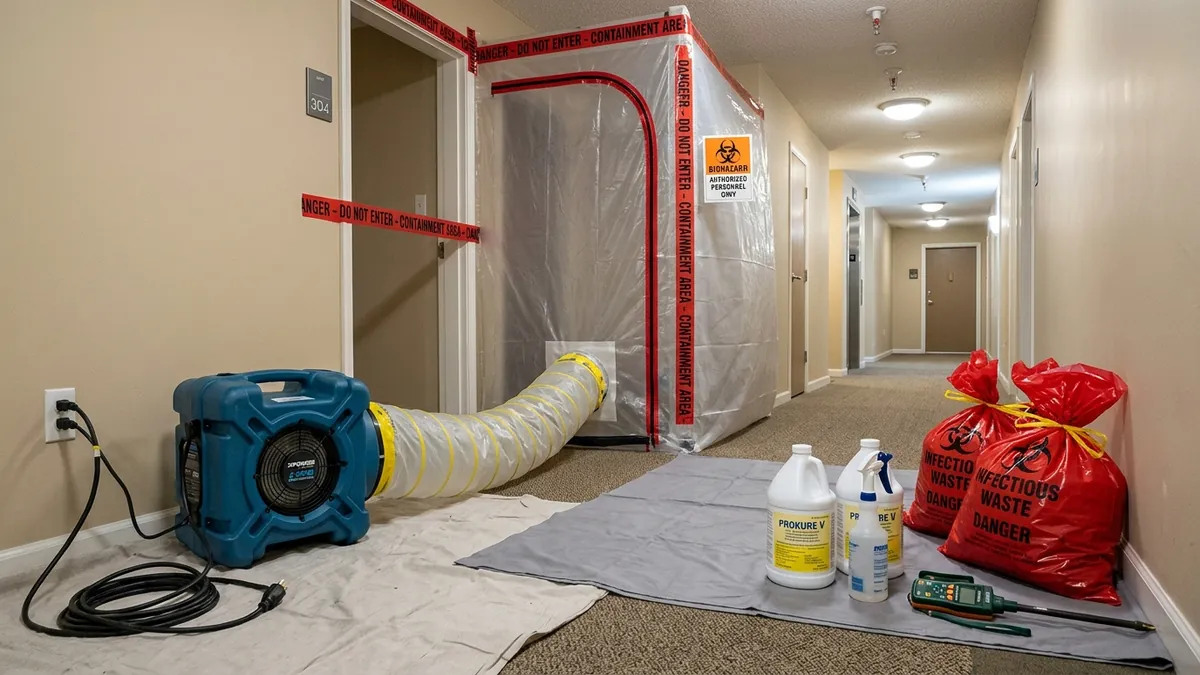
In most circumstances, standard homeowners insurance policies (HO-3 special form), condominium policies (HO-6), landlord policies, and commercial property coverages provide coverage for professional biohazard remediation resulting from sudden, accidental tragedies, unattended deaths, or traumatic incidents. Coverage is typically provided under the property damage provisions of the policy, requiring the property owner to cover only their designated policy deductible.
Which Policy Clauses Typically Cover Biohazard Remediation?
Homeowners policies are designed to protect policyholders against sudden and accidental physical loss to the dwelling and personal property. When an incident occurs—such as a traumatic injury, suicide, unattended death, or severe sewer backup—the biological contamination is categorized as direct structural physical damage.
Under standard HO-3 policies, coverage extends to dwelling protection (Coverage A) for structural elements like hardwood subfloors, joists, and drywall, as well as personal property (Coverage C) for non-salvageable contaminated furnishings. Additionally, Loss of Use (Coverage D) may reimburse temporary living accommodations if the property is uninhabitable during forensic decontamination.
- Coverage A (Dwelling): Encompasses subfloor demolition, framing disinfection, sealing, and structural repairs.
- Coverage C (Personal Property): Reimburses non-salvageable contaminated furniture, mattresses, clothing, and personal items.
- Coverage D (Loss of Use): Provides hotel or temporary housing reimbursement while remediation containment is active.
- Water Backup Endorsements: Covers Category 3 sewer and drain backpressure when an optional rider is attached to the policy.
What Steps Are Required to File a Biohazard Insurance Claim in Illinois?
Filing a biohazard insurance claim requires structured documentation to ensure smooth approval and rapid adjuster processing. The first priority is contacting a reputable remediation provider who coordinates directly with insurance adjusters.
Once initial contact is established, the remediation team conducts a photographic and moisture mapping survey, categorizing impacted structural materials before any demolition commences. Technicians compile an itemized scope of work utilizing standard industry estimating guidelines (such as Xactimate codes) accepted by major national and regional carriers.
The remediation supervisor coordinates directly with the assigned property adjuster, submitting formal waste disposal manifests, moisture logs, and ATP bioluminescence clearance reports to substantiate all performed procedures.
Are There State Assistance Programs for Violent Crime Scenes in Illinois?
For families facing trauma resulting from violent crimes who may be uninsured or underinsured, the State of Illinois provides financial support through the Illinois Crime Victims Compensation Act (740 ILCS 45/).
Administered by the Office of the Illinois Attorney General and the Illinois Court of Claims, this statutory program provides financial assistance to eligible victims and their immediate family members for expenses incurred as a direct result of violent crimes, including residential crime scene cleanup and forensic decontamination. Qualified applicants must file formal documentation within the statutory timeframe and provide official law enforcement incident reports.
What Common Mistakes Should Property Owners Avoid During the Claims Process?
Attempting to clean the scene prior to professional assessment is one of the most critical errors property owners make. Removing items, wiping surfaces, or disposing of contaminated belongings before an adjuster or forensic technician documents the damage can jeopardize insurance claim approval.
Another frequent error is delaying remediation. Decomposition fluids and biohazards cause progressive structural damage; allowing biological fluids to soak deeper into framing over multiple days can lead to secondary complications, including mold growth or structural rot, which insurance carriers may challenge under neglect or failure-to-mitigate clauses.
Questions About Insurance Coverage for Biohazard Remediation?
Our compassionate specialists coordinate directly with insurance carriers across Illinois, providing complete documentation and claims support to alleviate your burden during difficult times.
Frequently Asked Questions
Will my homeowners insurance premiums increase if I file a biohazard claim?
Insurance premium adjustments depend on the carrier, claims history, and policy structure. However, biohazard incidents resulting from sudden domestic accidents, crime, or natural unattended deaths are treated as non-preventable physical property damage claims, distinct from recurring maintenance issues.
Does the property owner have to pay the remediation company upfront?
Reputable forensic restoration firms work directly with your insurance carrier through third-party billing agreements. The company submits itemized documentation directly to the insurance company, leaving the homeowner responsible only for their designated policy deductible.
What if the biohazard damage is caused by a sewer backup?
Standard homeowners insurance policies typically exclude municipal drain backups unless the policyholder has added an optional Water Backup of Sewer or Drain endorsement. If this endorsement is in place, cleanup, structural sanitization, and restoration are covered up to the specified endorsement limit.