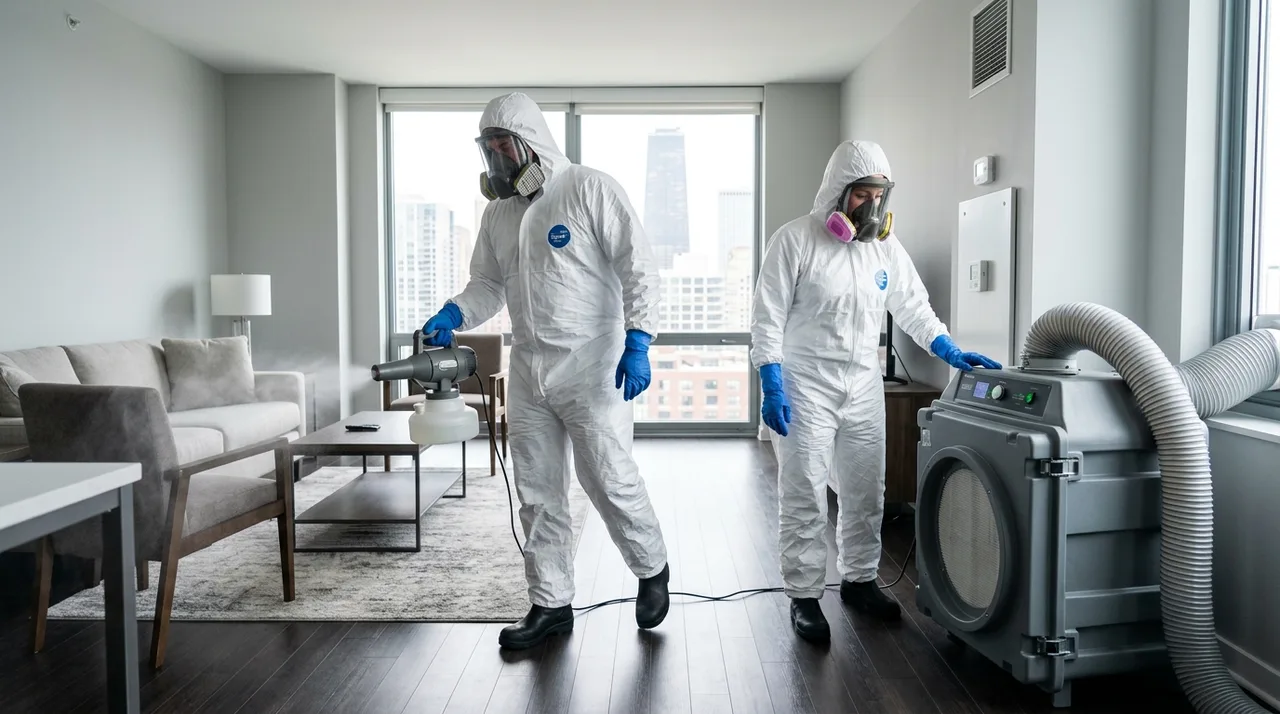
Biohazard cleanup is the specialized process of safely removing, decontaminating, and disposing of biological materials—including blood, bodily fluids, decomposition byproducts, sewage, and infectious pathogens—from residential, commercial, or municipal properties. Unlike ordinary custodial janitorial services, biohazard remediation follows strict federal OSHA bloodborne pathogen standards and state medical waste transport regulations to render contaminated spaces biologically safe for human occupancy.
What Biological Materials Are Classified as Biohazards?
Biological hazards comprise organic substances, microorganisms, or biological toxins that present severe health hazards to living organisms, primarily human beings. In forensic and residential remediation contexts, biohazards are not limited to hospital laboratory samples; they frequently occur in private residences and commercial buildings following traumatic incidents or system failures.
Under regulatory definitions established by the Occupational Safety and Health Administration (OSHA) and the Centers for Disease Control and Prevention (CDC), biological hazards require specialized handling due to their potential to transmit life-threatening infectious diseases.
- Human blood, blood components, and liquid bodily fluids capable of transmitting bloodborne pathogens.
- Decomposition byproducts and volatile organic compounds associated with unattended human or animal death.
- Category 3 blackwater and raw sewage containing enteric bacteria, coliforms, and viral pathogens.
- Animal waste, gross filth, and bio-accumulations resulting from severe hoarding conditions.
- Sharps, needles, and medical debris contaminated with pathogenic organisms.
How Does Biohazard Cleanup Differ from Regular Cleaning?
The distinction between standard commercial cleaning and forensic biohazard remediation centers on pathogen neutralization, porous material excision, and legal waste handling. Standard janitorial cleaners use off-the-shelf detergents designed for surface aesthetics; they lack the protective engineering controls and chemical virucides required to eradicate bloodborne viruses beneath floorboards and behind drywall.
Forensic remediation technicians utilize medical-grade personal protective equipment (PPE), establish airtight containment barriers with negative pressure differential airflow, and employ EPA-registered broad-spectrum disinfectants proven effective against resilient pathogens.
| Remediation Factor | Standard Janitorial Cleaning | Professional Biohazard Remediation |
|---|---|---|
| Primary Objective | Visual cleanliness and cosmetic dust removal | Microbial eradication and complete biological safety |
| Protective Equipment | Standard gloves and custodial aprons | Full Level C PPE with HEPA/organic vapor respirators |
| Air Quality Control | Open windows or standard room fans | Negative air machines with commercial HEPA filtration |
| Substrate Handling | Surface wiping and top-coat mopping | Surgical excision of contaminated subfloors and drywall |
| Waste Disposal | Municipal curbside solid waste bins | Permitted Illinois PIMW manifest autoclave destruction |
| Verification Standard | Visual inspection by property owner | Scientific ATP bioluminescence surface swab testing |
What Regulations Govern Biohazard Decontamination in Illinois?
Biohazard remediation is heavily regulated across both federal and state jurisdictions to safeguard property occupants, emergency workers, and the general public. Compliance is not optional; improper handling of infectious biological waste exposes property owners and employers to severe regulatory penalties and civil liability.
In Illinois, the primary governing standard for technician safety is OSHA 29 CFR 1910.1030 (the Bloodborne Pathogens Standard), which mandates comprehensive exposure control plans, universal precautions, hepatitis vaccination protocols, and documented employee training. Simultaneously, waste management is governed by the Illinois Environmental Protection Agency under Title 35 of the Illinois Administrative Code, Part 1420 (Potentially Infectious Medical Waste - PIMW), requiring packaging into ASTM-rated red bags and tracking through chain-of-custody manifests to permitted high-temperature autoclave treatment facilities.
What Are the Standard Steps in a Biohazard Remediation Protocol?
Every professional biohazard project follows a systematic, multi-barrier standard of care to ensure 100% biological elimination without cross-contaminating unaffected areas of the property.
First, technicians perform an exhaustive hazard assessment using ultraviolet inspection lamps and moisture mapping to identify the full perimeter of fluid migration. Second, physical containment barriers of 6-mil polyethylene sheeting are erected, and negative pressure HEPA air scrubbers are activated to exhaust scrubbed air while preventing airborne contaminants from migrating into adjacent rooms.
Third, gross biological contaminants and non-salvageable porous building materials (such as carpet pads, subfloor decking, and drywall) are excised and sealed into PIMW containers. Fourth, remaining structural assemblies undergo multi-stage sanitization using enzymatic protein digestants and EPA-registered hospital-grade virucides with strict 10-minute wet contact dwell times. Finally, surface sterility is objectively confirmed through ATP bioluminescence testing before a formal Certificate of Remediation is issued.
Need Professional Biohazard Remediation Guidance in Chicago?
Our forensic restoration specialists provide discreet, 24/7 biological decontamination across Chicago and Cook County. Call our confidential crisis dispatch line for immediate assistance.
Frequently Asked Questions
Can I clean up a biohazard situation on my property myself?
Property owners are strongly advised against attempting to clean biological hazards without professional protective equipment, commercial virucides, and proper containment. Contact with bloodborne pathogens, infectious bacteria, and aerosolized decomposition gases poses severe health hazards, while household cleaning supplies fail to penetrate porous building materials, leaving active pathogens and structural odors trapped inside the property.
How do technicians verify that a contaminated space is safe to re-enter?
Technicians perform scientific Adenosine Triphosphate (ATP) bioluminescence surface swab testing across treated structural substrates. ATP testing measures relative light units (RLUs) to objectively confirm the absence of cellular organic matter and active microbial residues before containment barriers are removed.
What happens to materials removed from a biohazard scene in Chicago?
All porous materials saturated with biological fluids are categorized as Potentially Infectious Medical Waste (PIMW) under 35 Ill. Adm. Code Part 1420. They are packaged in puncture-resistant red biohazard bags and rigid secondary containers, transported by permitted haulers, and destroyed via high-temperature autoclave processing under formal manifest tracking.