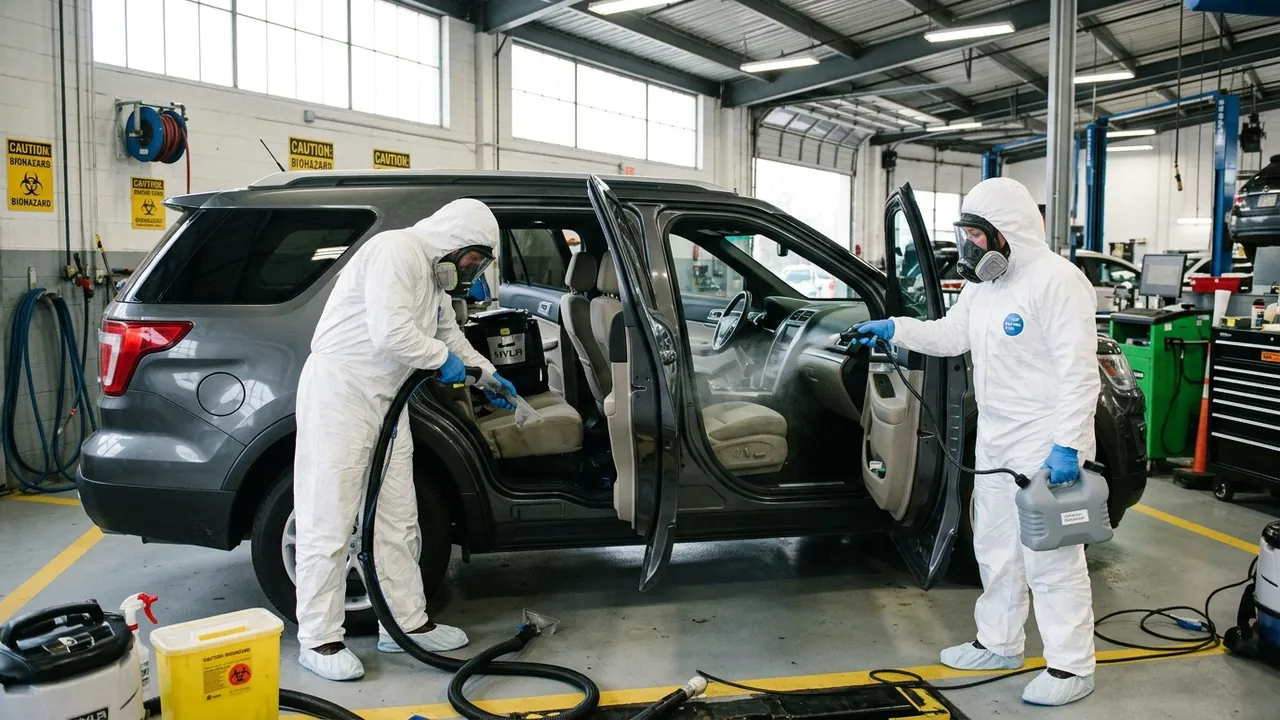
Vehicle biohazard decontamination is the specialized forensic restoration process required when human blood, bodily fluids, decomposition byproducts, or chemical reagents contaminate an automobile interior. Because vehicles feature compact passenger cabins, open-cell seat foam that absorbs fluids rapidly, complex electrical harnesses, and enclosed HVAC ventilation channels, professional remediation requires seat dismantling, foam extraction, vaporized virucides, and molecular odor neutralization.
Why Are Vehicle Interiors More Difficult to Remediate Than Buildings?
Automobile cabins are enclosed, temperature-variable environments constructed with synthetic textiles, high-density polyurethane seat foams, and intricate electronics. In Chicago’s extreme weather—hot summer heat and sub-zero winter temperatures—biological contaminants deteriorate rapidly inside closed vehicles.
When fluids spill onto vehicle seats, they quickly soak through outer leather or upholstery and settle into deep open-cell cushion foam and metal floor pans. Surface wiping leaves substantial fluid reservoirs inside the seat core, where heat accelerates decomposition and foul odors circulate through the heating and air conditioning system.
What Steps Are Followed During Automotive Forensic Remediation?
Automotive decontamination requires a systematic, mechanically sound protocol to restore the vehicle without damaging complex onboard systems.
Step 1: Vehicle Isolation & Cabin Evacuation. The vehicle is placed in a secure, well-ventilated containment bay where technicians deploy commercial HEPA air scrubbers to evacuate volatile odors and airborne contaminants.
Step 2: Component Disassembly. Technicians unbolt affected seating, lift carpeting, and detach center console trims to expose metal floor pans and sub-carpet insulation.
Step 3: Surgical Extraction & Replacement. Saturated seat foam and carpet underlayment that cannot be restored are excised and bagged as regulated PIMW waste. Bare floor pans and metal framing are cleaned with enzymatic digestants and broad-spectrum virucides.
Step 4: HVAC & Duct Decontamination. Specialized aerosolized antimicrobial biocides are introduced into the climate control intake, sanitizing blowers, evaporator cores, and cabin air ducts.
Step 5: Molecular Odor Treatment. Hydroxyl generators operate inside the sealed vehicle cabin to neutralize embedded odor compounds without harming dashboard electronics, touchscreens, or rubber seals.
Does Auto Insurance Cover Vehicle Biohazard Decontamination?
In the vast majority of cases, comprehensive auto insurance coverage covers biohazard decontamination, unattended death remediation, and trauma restoration resulting from unexpected medical emergencies, accidents, or criminal acts.
The vehicle owner is typically responsible solely for their designated comprehensive deductible. In situations where contamination has saturated irreplaceable electrical wiring harnesses or multiple structural seat assemblies beyond reasonable restoration feasibility, insurance adjusters may designate the vehicle as a total loss.
Vehicle Impacted by Biological Contamination in Chicago?
Our specialized automotive remediation team restores passenger cars, commercial fleets, and municipal vehicles safely and discreetly across Chicago and Cook County.
Frequently Asked Questions
Can car detailing services remove blood or decomposition odors?
No. Standard automotive detailers use cosmetic shampoos and steam extractors that lack EPA-registered virucidal efficacy against bloodborne pathogens. Steam detailing can worsen the situation by driving fluids deeper into seat foam and aerosolizing pathogens throughout the cabin.
Can decomposition odors ever be removed from a car?
Yes. By removing contaminated foam cushions, sanitizing metal floor pans, flushing the climate control ductwork with antimicrobial fog, and running mobile hydroxyl generators, decomposition odors can be permanently eliminated at the molecular level.
Do you clean municipal police cruisers and emergency fleet vehicles?
Yes. We provide rapid-response forensic decontamination for municipal police vehicles, EMS ambulances, airport shuttle vans, rental car fleets, and commercial delivery trucks across the greater Chicago area.