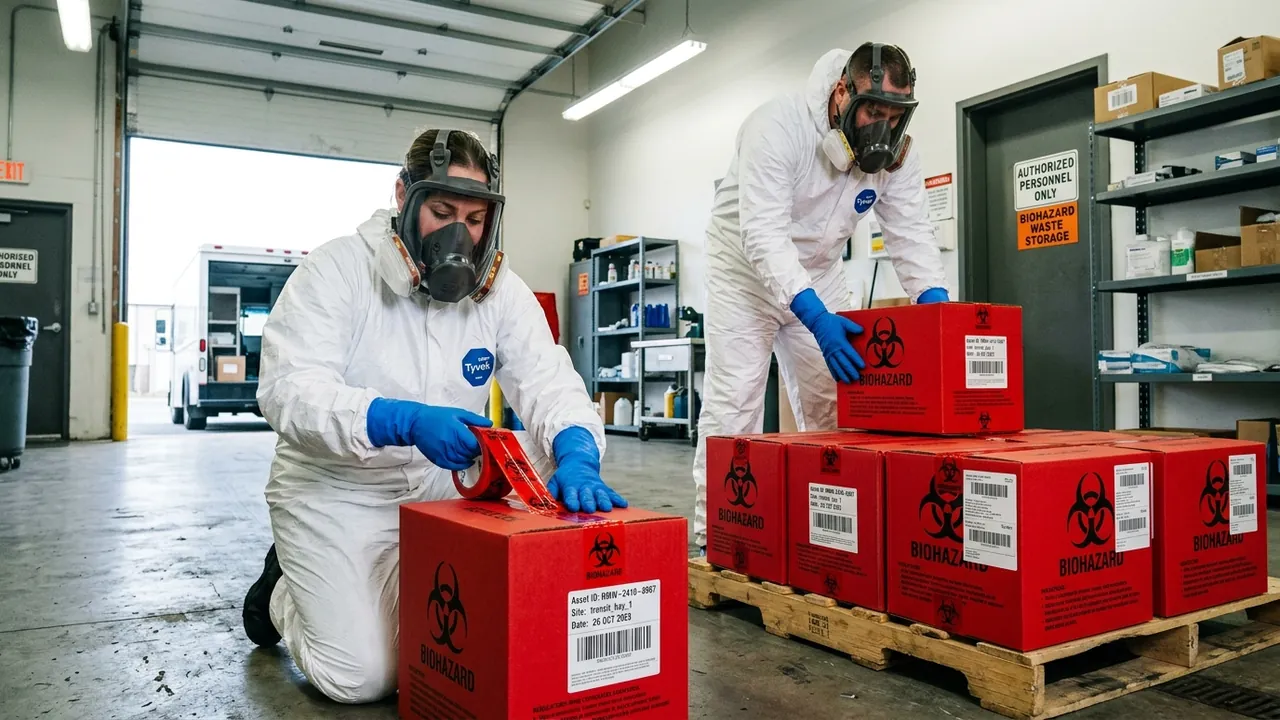
In the State of Illinois, all biological debris, blood-saturated building materials, sharps, and forensic waste are legally classified as Potentially Infectious Medical Waste (PIMW). Regulated under Title 35 of the Illinois Administrative Code, Part 1420, PIMW must be packaged in puncture-resistant, leak-proof ASTM-rated red biohazard bags, placed in rigid secondary containers, and transported by permitted medical waste haulers under formal manifest tracking for high-temperature autoclave or incineration destruction.
What Materials Are Legally Classified as PIMW in Illinois?
The Illinois Environmental Protection Act and Illinois EPA regulations clearly delineate which materials constitute Potentially Infectious Medical Waste. In forensic cleanup scenarios, this includes any porous item saturated, caked, or encrusted with blood or bodily fluids that would release fluids if compressed.
Items classified as PIMW include blood-saturated carpet padding, extracted subflooring, mattresses, soft furnishings, sharps, PPE contaminated with biological fluids, and forensic testing debris. Discarding these materials into standard municipal trash containers or dumpsters is illegal in Illinois and carries substantial civil and criminal penalties.
What Are the Mandatory Packaging and Labeling Requirements?
Illinois regulations enforce strict packaging standards to prevent leaks, punctures, and pathogen exposure during transit.
Primary Packaging: Waste must be enclosed in heavy-gauge polyethylene bags bearing the international biohazard symbol, manufactured to meet ASTM D1709 dart impact and ASTM D1922 tear resistance standards.
Secondary Packaging: Red biohazard bags must be placed inside rigid, corrugated fiberboard or heavy plastic containers that are puncture-resistant, spill-proof, and tamper-evident.
Labeling & Tracking: Each container must display the universal biohazard emblem, the generator’s identifying information, the date of packaging, and the transporter’s state permit number.
How Does Manifest Tracking Protect Property Owners?
Illinois law mandates a cradle-to-grave chain of custody for all regulated medical waste through the Illinois PIMW Manifest system.
When a permitted hauler removes biohazardous containers from a remediation site, a multi-copy manifest is signed. Once the waste reaches an authorized treatment facility and undergoes high-temperature autoclave sterilization or medical incineration, the final signed manifest is returned to the generator, providing legal verification that all biohazardous materials were destroyed in compliance with state and federal environmental laws.
Require Regulated Medical Waste Disposal in Chicago?
Our team maintains full compliance with Illinois EPA Title 35 PIMW standards, providing secure packaging, permitted transportation, and complete manifest documentation.
Frequently Asked Questions
Can I put blood-soaked towels or clothes into my regular household garbage in Chicago?
No. Illinois EPA regulations prohibit discarding materials saturated with blood or biological fluids into municipal municipal solid waste streams. Doing so endangers sanitation workers, contaminates landfills, and violates state environmental statutes.
How is Potentially Infectious Medical Waste destroyed in Illinois?
PIMW is treated at state-permitted medical waste facilities through high-temperature thermal autoclaving (pressurized steam sterilization) or regulated high-temperature incineration, rendering all pathogens completely inert before disposal in approved landfills.
Does the property owner receive proof of legal waste disposal?
Yes. Following remediation, the property owner receives an official copy of the signed Illinois PIMW manifest tracking document, detailing container counts, dates, transporter permits, and facility destruction verification.