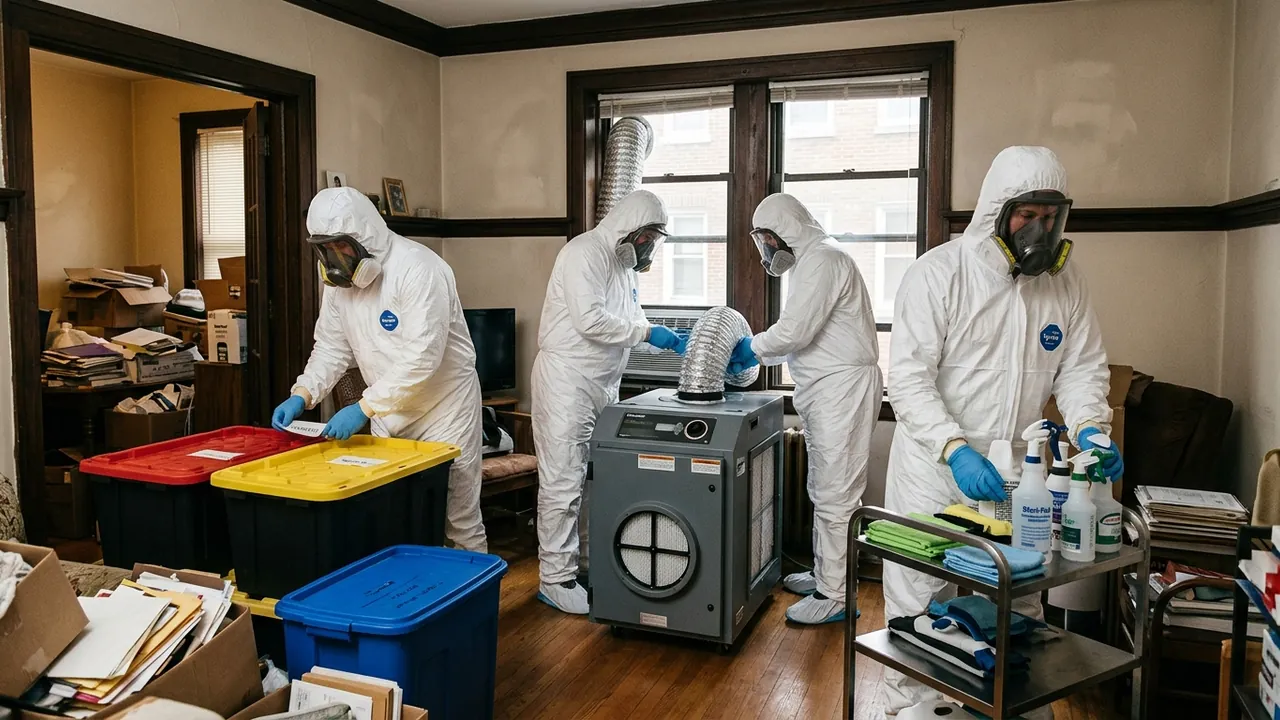
Severe hoarding environments (frequently classified as Level 4 and Level 5 hoarding) present severe biological health hazards that extend far beyond physical clutter. Hidden biohazards commonly include accumulated animal and human waste, toxic airborne ammonia concentrations, hantavirus and salmonella from rodent infestations, decaying organic matter, and pathogenic fungal spores trapped within compressed debris piles, requiring specialized respiratory protection and phased remediation.
What Hidden Biological Hazards Exist in Severe Hoarding Properties?
When belongings accumulate densely over months or years, the physical weight and lack of ventilation create micro-climates where biological pathogens thrive undisturbed beneath upper clutter layers.
Compressed piles trap moisture, spoiled food, animal urine, and feces, fostering active bacterial and fungal growth. Residents and family members attempting to clean without protective measures often inadvertently disturb these hidden contaminants, aerosolizing dangerous spores and pathogens.
- Animal Waste & Ammonia Toxicity: Feline and canine urine produce concentrated ammonia gas that causes respiratory inflammation and burns mucous membranes.
- Rodent Vectors: Rodent urine and droppings carry virulent pathogens including Hantavirus Pulmonary Syndrome, Leptospirosis, and Lymphocytic Choriomeningitis (LCMV).
- Human Waste Biohazards: Broken plumbing or blocked bathroom fixtures frequently force residents to collect human waste in containers, creating severe biological contamination.
- Black Mold & Mycotoxins: Trapped moisture behind compacted debris piles fosters toxic Stachybotrys chartarum and Aspergillus mold colonies.
- Pest Infestations: Cockroach allergens, bedbugs, and flies thrive within rotting foodstuffs and organic waste piles.
Why Is Respiratory Protection Essential During Hoarding Cleanups?
Air quality inside distressed hoarding homes is frequently dangerous to human health. Disturbing compacted debris releases millions of airborne particulates, dried fecal matter, rodent hair, and fungal mycotoxins into the breathing zone.
Professional technicians never enter severe hoarding environments without appropriate respiratory protection. Technicians utilize full-face or half-mask elastomeric respirators fitted with P100 HEPA particulate filters and organic vapor cartridges, while high-volume HEPA air scrubbers operate continuously to capture airborne contaminants.
How Does Structured, Compassionate Hoarding Remediation Work?
Addressing severe hoarding requires an empathetic, non-judgmental approach combined with rigorous decontamination standards. Forced cleanouts without empathy cause psychological distress and rarely result in lasting recovery.
Professional remediation involves phased execution: first, establishing safe access pathways and air filtration; second, methodical sorting to recover valuable documents, photographs, and sentimental family keepsakes; third, safely removing biological waste and unsalvageable debris; and fourth, deep sanitization and antimicrobial treatment of structural walls, subfloors, and fixtures.
Need Respectful, Compassionate Hoarding Cleanup in Chicago?
Our specialized team provides patient, non-judgmental hoarding remediation and biohazard decontamination across Chicago and Cook County. We restore safety while honoring your dignity.
Frequently Asked Questions
Can family keepsakes and documents be salvaged from a hoarding environment?
Yes. Professional remediation teams conduct careful, staged sorting to identify and preserve important financial documents, deeds, family photographs, jewelry, and sentimental keepsakes, decontaminating salvageable items before returning them to the family.
What should families do if animal feces are widespread throughout the home?
Widespread animal waste should not be swept or vacuumed with household appliances, as dry sweeping aerosolizes bacteria and viral particles. Professional remediation involves wetting agents, enzymatic digestants, HEPA-filtered extraction, and substrate sanitization.
How do you handle severe odors in a hoarding home?
Once physical debris and biological waste are cleared, technicians deploy industrial hydroxyl generators. Hydroxyl atmospheric radicals dismantle airborne ammonia, mold VOCs, and organic decomposition odors at the chemical bond level without damaging interior finishes.