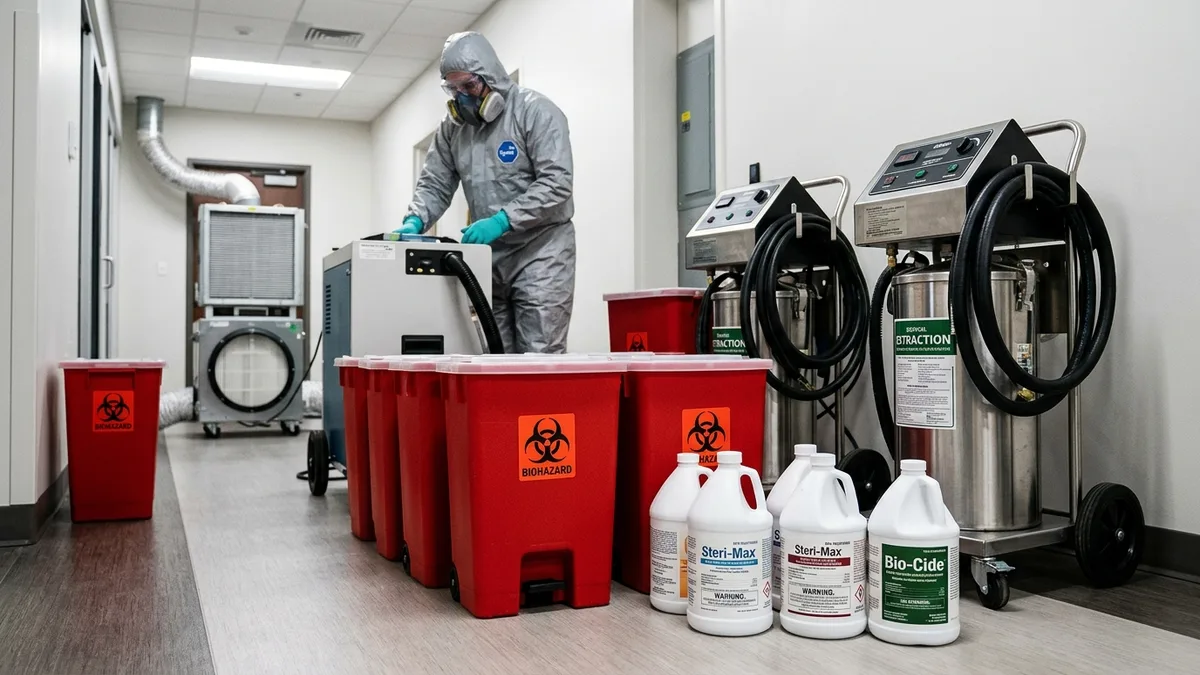
Bloodborne pathogens are infectious microorganisms present in human blood and bodily fluids that can cause severe, life-threatening human disease, including Hepatitis B virus (HBV), Hepatitis C virus (HCV), and Human Immunodeficiency Virus (HIV). When blood spills occur in residential or commercial settings, viruses can remain infectious on environmental surfaces for days or weeks, requiring hospital-grade virucides, strict PPE, and controlled disposal under OSHA 29 CFR 1910.1030 standards.
How Long Can Bloodborne Viruses Survive on Indoor Surfaces?
A common misconception is that once blood dries, the infectious threat dissipates. In reality, several major bloodborne viruses exhibit remarkable environmental resilience and can remain viable on household and commercial surfaces for extended periods.
According to the Centers for Disease Control and Prevention (CDC), Hepatitis B virus can survive and remain infectious on environmental surfaces for at least seven days in dried blood. Hepatitis C virus can remain viable for several days to weeks depending on room temperature and humidity. While HIV is more fragile when exposed to dry ambient air, it can still pose an infection threat in liquid blood puddles or syringe cavities.
| Pathogen | Primary Mode of Transmission | Surface Survival Time | Infection Severity |
|---|---|---|---|
| Hepatitis B Virus (HBV) | Blood and body fluid exposure | 7+ days in dried blood | High: chronic liver disease, cirrhosis, liver cancer |
| Hepatitis C Virus (HCV) | Direct blood-to-blood contact | Up to 3 weeks on surfaces | High: chronic liver inflammation and liver failure |
| Human Immunodeficiency Virus (HIV) | Blood, fluids, and sharps punctures | Several hours to days in fluids | Severe: progressive immune system failure |
| Methicillin-Resistant S. Aureus (MRSA) | Contact with contaminated fluids/items | Weeks to months on porous items | Moderate to severe: virulent soft-tissue infections |
Why Does Household Bleach Fail on Porous Biohazard Spills?
Many property owners assume that applying household chlorine bleach will completely sanitize blood-saturated areas. While bleach is an effective surface disinfectant on non-porous glass or stainless steel, it has critical limitations on common residential materials.
Bleach rapidly inactivates in the presence of heavy organic matter (such as blood proteins and fats). Furthermore, bleach cannot penetrate porous substrates like wood subflooring, carpet padding, drywall, or concrete. It bleaches the color out of biological fluids without penetrating to destroy pathogens underneath, creating a false sense of safety while active viruses remain trapped beneath the surface.
What Personal Protective Equipment Is Required for Safe Remediation?
Professional remediation specialists operate under universal precautions, treating all human blood and bodily fluids as infectious regardless of known source status.
Technicians don full Level C personal protective equipment, including puncture-resistant nitrile inner and outer gloves, impervious microporous coveralls (Tyvek suits) with taped seams, fluid-resistant rubber boot covers, and full-face elastomeric respirators fitted with combination HEPA P100 and organic vapor cartridges to protect mucosal membranes against aerosolized droplets.
What Chemical Formulations Effectively Neutralize Bloodborne Pathogens?
Forensic remediation utilizes EPA-registered broad-spectrum hospital-grade virucides and bactericides with specific label claims against HBV, HCV, and HIV.
Prior to disinfection, technicians apply enzymatic digestants containing protease enzymes that break down coagulated protein matrices and cellular debris. The virucide is then applied with strict adherence to manufacturer-mandated wet contact dwell times (typically 10 full minutes) to ensure total pathogen inactivation.
Dealing with a Severe Blood or Bodily Fluid Spill in Chicago?
Do not risk infectious exposure. Our OSHA-compliant forensic technicians safely neutralize bloodborne pathogens and restore properties across the Chicago area 24/7.
Frequently Asked Questions
Can you contract Hepatitis B from touching dried blood?
Yes. The Hepatitis B virus is exceptionally resilient and can remain viable in dried blood on surfaces for over seven days. If infectious particles contact non-intact skin, micro-cuts, or mucous membranes, transmission can occur.
Can blood-saturated carpeting or mattresses be cleaned and reused?
No. Porous items such as mattresses, carpet padding, and upholstered furniture that are deeply saturated with blood cannot be reliably sanitized throughout their core foam. Professional protocols require removing and packaging these items as regulated medical waste.
What is the OSHA standard that governs blood cleanup?
OSHA 29 CFR 1910.1030 is the Bloodborne Pathogens Standard. It mandates universal precautions, engineering controls, exposure control plans, personal protective equipment, and formal training for any personnel handling biological materials.