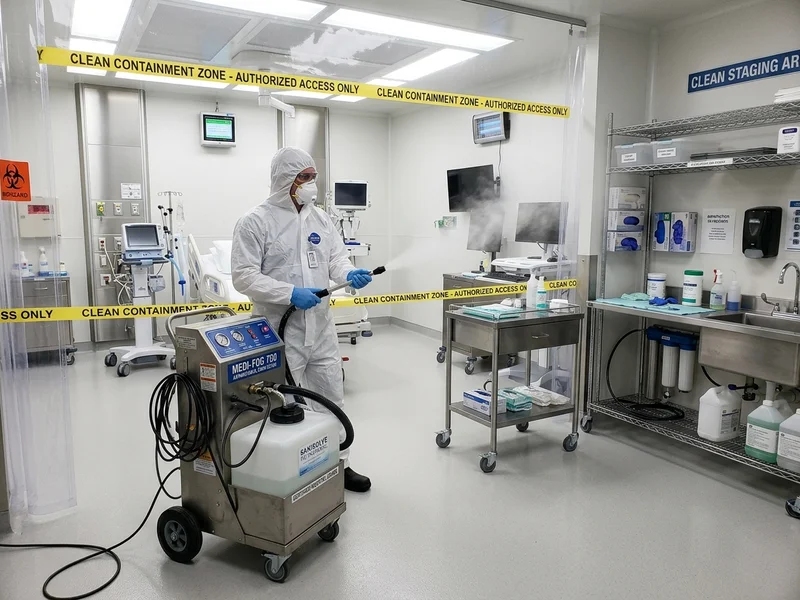
The difference between biohazard cleanup and regular cleaning lies in pathogen eradication, legal compliance, and structural containment. Regular janitorial cleaning focuses on surface aesthetics, dust removal, and cosmetic cleanliness using standard household chemicals. In contrast, forensic biohazard remediation involves isolating dangerous bloodborne pathogens, excising contaminated structural subfloors, deploying hospital-grade virucides, and managing regulated medical waste under strict OSHA and EPA legal standards.
Why Can’t Regular Cleaning Services Handle Biohazard Contamination?
Commercial janitorial cleaners, maid services, and carpet cleaning companies perform essential maintenance work, but they lack the training, protective equipment, and regulatory permits required for biological contamination.
First, standard cleaning companies are not equipped with OSHA-compliant respiratory protection or impervious Level C PPE. Second, sending employees into biohazardous environments without documented bloodborne pathogen training and hepatitis vaccinations violates federal workplace safety laws. Third, standard cleaning equipment cross-contaminates vacuum hoses, mop buckets, and tools, spreading pathogens into other areas of the property.
What Chemical and Technical Tools Distinguish Forensic Remediation?
Forensic remediation relies on specialized chemical formulations and scientific instrumentation not found in standard custodial closets.
While janitorial services use multi-surface sprays, forensic specialists apply medical-grade enzymatic digestants to dissolve dried protein layers, followed by broad-spectrum hospital disinfectants with proven kill claims against Hepatitis B, Hepatitis C, HIV, and MRSA.
Additionally, remediation teams deploy commercial HEPA air filtration systems, ultraviolet forensic detection lamps, thermal cameras to map fluid travel, and Adenosine Triphosphate (ATP) bioluminescence swab meters to scientifically verify surface sterility.
What Are the Liability Risks of Using Inadequate Cleaning Services?
Property owners and business managers who hire standard janitorial cleaners for biological spills face significant legal and financial liabilities.
If an untrained cleaner sustains an accidental puncture or biological exposure, the property owner or employer can be held liable under OSHA regulations and civil negligence claims. Furthermore, if lingering pathogens or odors cause illness or distress to future tenants or guests, the property owner remains legally exposed for failing to properly remediate known biological hazards.
Need Commercial or Residential Biohazard Remediation in Chicago?
Do not settle for superficial cleaning when health is on the line. Contact our forensic restoration team for hospital-grade decontamination adhering to OSHA and EPA standards.
Frequently Asked Questions
Can carpet steam cleaning remove biological blood contamination?
No. Standard hot water carpet extraction pushes blood fluids deeper into the porous foam padding and subfloor beneath, while the heat can coagulate proteins and aerosolize infectious pathogens into the room air.
Do biohazard remediation teams provide documentation for landlords and buyers?
Yes. Following remediation, professional providers issue a comprehensive Certificate of Remediation, complete with ATP swab verification results and waste disposal manifests, confirming the property meets biological safety standards.
Are biohazard remediation companies insured differently than maid services?
Yes. Professional biohazard remediation firms carry specialized pollution liability, environmental impairment, and commercial general liability insurance specifically covering hazardous materials and biological waste.